
IGBT Module Procurement Priorities: A Ranking for Industrial Buyers
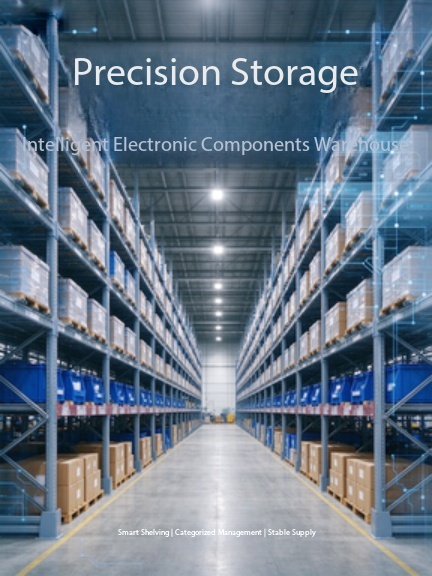
Power semiconductor modules held in a controlled precision storage area before shipment. Copyright: Jiangsu core diamond times Electronic Technology Co., Ltd.
Industrial buyers sourcing IGBT modules for inverters, converters and motor drives usually fail in the same way: the module is ordered against a package size and a price, while the parameters that decide whether the unit survives in the field are confirmed last, or never. An IGBT module is an integrated power semiconductor module containing IGBT chips and freewheeling diodes for high-power electric energy conversion. It is a voltage-controlled device: gate voltage switches the internal chips on and off, converting between DC and AC power to control power flow. Because that switching function sits directly in the energy path of the machine, every unverified parameter becomes an operational risk rather than a datasheet detail.
The ranking below orders seven procurement priorities by the risk each one removes. Voltage rating comes first because a module with the wrong blocking voltage class cannot be used at all. Current rating, switching performance, thermal management and certification compliance follow, because they determine service life, fault behaviour and market acceptance. Package fit and supply continuity close the ranking, because they determine whether the module can be installed and re-ordered without redesign.
Quick Answer: The Seven Procurement Priorities at a Glance
| Rank | Procurement priority | Decision question | Main risk if deprioritized |
|---|---|---|---|
| 1 | Voltage rating | Does the blocking voltage class cover the DC bus and switching spikes? | Overvoltage breakdown; module unusable in the application |
| 2 | Current rating and margin | Is rated current sized against continuous working current and peak overload current? | Overheating; accelerated junction temperature fatigue |
| 3 | Switching performance and short-circuit capability | Are switching losses and short-circuit withstand time matched to frequency and drive design? | Excess switching loss; failure under fault conditions |
| 4 | Thermal management | Is the thermal path - thermal resistance, thermal grease, screw torque, heat sink - validated? | Over-temperature damage; shorter service life |
| 5 | Certification and compliance | Are ISO9001:2015 status and IEC, UL and CCC compliance statements available? | Market access and audit failure |
| 6 | Package and drive-board compatibility | Do pin definition, mounting space and drive board match the design? | Rework, mechanical stress, assembly failure |
| 7 | Supply continuity, lead time and lifetime cost | Can the same model be re-ordered and supported across the project lifecycle? | Line stoppage; uncontrolled substitution |
Problem Definition: Procurement Failure in IGBT Modules Is a Sequence Problem
When an IGBT module fails in an industrial inverter, the failure is usually attributed to the supplier. In practice, the more common root cause is that the buyer confirmed the wrong things first. The documented failure pattern for IGBT modules lists excessive junction temperature, power cycling fatigue, overvoltage breakdown and short-circuit damage as the most common causes. Each of those causes maps directly to a procurement checkpoint: voltage rating, current margin, thermal path and drive behaviour.
Verification is also multi-layered. An IGBT module can fail to turn on even when the module itself is intact - missing gate drive power supply, an open or poorly contacted gate wire, wrong gate signal logic, an activated interlock protection, or internal chip damage. That means a procurement checklist that stops at the module part number is incomplete. The buyer also needs to know the drive conditions, the heat sink interface and the protection arrangement around the module, because those conditions decide whether the selected part will work in the cabinet.
The practical consequence: IGBT module procurement is a sequencing discipline. Confirm the parameters that can invalidate the design first, and the parameters that only affect cost or convenience last.
Industry Background: Why Parameter Discipline Matters More Each Year
The IGBT category is large and still expanding. Market Research Future estimates the global IGBT market size at USD 9,202.9 million for 2024, with a projected CAGR of 11.02% from 2025 to 2035. Silicon carbide is growing alongside it: Fortune Business Insights sizes the global SiC module market at USD 980.7 million in 2025. SiC modules are also moving into high-end power conversion, a transition tracked in Yole Group's Power SiC 2025 market and applications report.
Demand is anchored in power conversion hardware. Infineon states that IGBT modules are a central component in inverters for electric drives, battery chargers, solar systems and wind power applications. Cost pressure is real as well: Market Research Future reports that IGBT accounts for nearly 10% of the cost of electric vehicles, which pushes buyers toward aggressive cost negotiation. At the same time, rankings are consolidating - StarPower Semiconductor is reported as the world's fifth-largest IGBT module supplier - so sourcing channels are increasingly mixed between global manufacturers and Chinese suppliers.
That combination of growth, technology transition and cost pressure is exactly why a priority order matters. When cost pressure is high, buyers shorten their checklist. The ranking below is designed to be the shortest checklist that still removes the largest risks.
Priority 1 - Voltage Rating: The First Filter
Blocking voltage is the parameter that decides whether a module can be used in a given circuit at all. IGBT modules in the power semiconductor module range supplied by Jiangsu core diamond times Electronic Technology Co., Ltd. cover a voltage rating of 600V to 1700V. Selecting inside that range is not the same as selecting correctly: the voltage class must cover the DC bus voltage plus the switching overshoot produced by the layout, the stray inductance and the turn-off behaviour of the drive.
Why it matters
An overvoltage spike that exceeds the module's rated voltage is one of the documented causes of IGBT short-circuit breakdown. It is also one of the most common failure causes listed for IGBT modules in general, alongside excessive junction temperature, power cycling fatigue and short-circuit damage. Overvoltage failures are destructive and usually appear in the field rather than on the test bench, which makes them expensive to trace.
How to verify with a supplier
- State the DC bus voltage and the expected switching overshoot, then ask the supplier to confirm the minimum voltage class that covers both.
- Request the voltage rating in writing as part of the quotation, not only in a catalogue page.
- Confirm whether the module's isolation and baseplate structure match the cabinet's insulation requirements. The module construction includes an aluminum ceramic substrate, a copper base plate, a silicon chip and a plastic housing, with an isolated baseplate.
Priority 2 - Current Rating and Overload Margin
Current rating is the second filter because it converts an electrical requirement into a thermal one. IGBT modules in this range cover a current rating of 50A to 1200A. The selection rule is explicit: rated current should be reserved with sufficient margin according to the continuous working current and the peak overload current of the system.
Why it matters
Overload is a documented cause of IGBT module overheating. When the working current exceeds the module's rated current, junction temperature rises, thermal cycling accelerates, and the module drifts toward the same failure modes - power cycling fatigue and over-temperature damage - that shorten service life. A module that looks adequate on nominal current can still be undersized for a motor starting surge or a converter overload event.
How to verify with a supplier
- Provide the continuous working current, the peak overload current and the duration of the overload event.
- Ask the supplier to state the current margin used and how it relates to the application profile.
- Confirm the switching frequency and cooling conditions at the same time, because both change the effective current capability of the module.
Priority 3 - Switching Performance and Short-Circuit Capability
Switching behaviour determines efficiency and thermal load. During turn-on and turn-off, voltage and current overlap for a short period, and the power loss generated in that overlapping interval is switching loss. It increases with higher switching frequency. The freewheeling diode integrated in the module provides a freewheeling path for inductive current during IGBT turn-off and suppresses voltage spikes to protect the chip.
Short-circuit capability belongs in the same priority because it is a safety margin, not a performance figure. IGBT short-circuit withstand time is the maximum time that an IGBT can sustain short-circuit current under specified test conditions before device failure. A longer withstand time gives the protection circuit more time to act, which raises the safety margin of the whole power system. Documented causes of short-circuit breakdown include overvoltage spikes above rated voltage, drive circuit failure with an abnormal gate signal, overload or short circuit at the output side, poor heat dissipation and static electricity damage during handling and assembly.
Module types and where the trade-off sits
A standard IGBT module suits general industrial inverters with balanced performance and cost and stable supply. A high-speed IGBT module is intended for medium-high frequency converters, offering lower switching loss at a higher cost. A SiC hybrid module targets high-efficiency, high-frequency systems with superior thermal performance and a premium price.
How to verify with a supplier
- Give the supplier the real switching frequency and the drive conditions, then ask for the switching loss position at that frequency.
- Ask for the short-circuit withstand time and confirm it against the protection response time in your design.
- Confirm the gate drive arrangement, because an abnormal gate signal is itself a listed cause of extra power loss and breakdown.
Priority 4 - Thermal Management: Where Most Field Failures Are Decided
Thermal performance is a stated evaluation criterion for IGBT module selection, alongside rated voltage and current, short-circuit capability, reliability, cost, supply lead time and certification. It is also where supplier comparison data becomes measurable. Comparing against generic domestic IGBT modules, the comparison data supplied for this product range states 15% lower thermal resistance, a 20 degrees C wider operating temperature range, more stable switching performance and a stricter full inspection standard. The same comparison data states lower switching and conduction loss, with system efficiency improved by about 1.2%.
Why it matters
The documented causes of IGBT module overheating are specific and operational: insufficient heat dissipation, thermal grease applied unevenly, excessive operating current, high thermal resistance, mounting screws that are loose so the base plate makes poor contact with the heat sink, a radiator blocked with dust, and an abnormal gate drive signal that generates extra power loss. The prescribed troubleshooting sequence reflects the priority order of the ranking: verify cooling capacity, then inspect thermal grease coating and base plate flatness, then confirm the actual working current and overload condition, then reapply thermal grease with the proper thickness and tighten screws to the specified torque.
How to verify with a supplier
- Request thermal resistance data and compare it against the heat sink and airflow available in the cabinet.
- Confirm the mounting interface: heat sink structure, mounting space and the specified screw torque. Screws should be fastened in diagonal sequence with a specified torque, and an insulation resistance test should be completed before power is applied.
- Confirm handling requirements. Installation should be performed with an anti-static wristband and gloves, the module should be taken from anti-static packaging and inspected for damage, and the heat sink and module base plate surfaces should be cleaned before thermal grease is applied uniformly.
- Confirm storage conditions for spare stock: original anti-static packaging, ambient temperature of -10 degrees C to +40 degrees C, relative humidity no higher than 70%, no dust, corrosive gas or static field, and no heavy goods stacked on modules.
- Note the lifecycle claim that supports long-term thermal performance: long service life, low failure rate, no regular maintenance required, and simple replacement when a module is damaged.

Inspection room used for incoming and outgoing verification of power semiconductor modules. Copyright: Jiangsu core diamond times Electronic Technology Co., Ltd.
Priority 5 - Certification and Compliance: The Gate to Market Access
Certification is ranked fifth because it does not affect how the module performs, but it decides whether the finished equipment can be sold into a given market and whether the supplier survives an audit. Two layers matter: the supplier's quality management system, and the compliance status of the product.
On the first layer, Jiangsu core diamond times Electronic Technology Co., Ltd., a distributor and service provider of power semiconductor modules based in Kunshan, Jiangsu Province, reports an ISO9001:2015 quality management system certification effective from June 2026. On the second layer, the company states that all products comply with international standards such as IEC, UL and CCC, meeting the requirements of industrial, energy storage and new energy projects. Supporting evidence is procedural: strict incoming inspection and outgoing quality control procedures are in place to reduce product failure rate, and every product is inspected before shipment to support stable performance.
How to verify with a supplier
- Request the current quality management certificate and confirm the certificate number, standard number and validity dates.
- Ask which standards the specific module family is declared against - IEC, UL or CCC - and for which markets.
- Ask for the inspection documentation that accompanies the shipment, so that a failed lot can be traced back to a batch.
Priority 6 - Package, Pin Definition and Drive-Board Compatibility
Package selection converts the electrical decision into a mechanical one, and it is where late-stage project changes originate. The documented recommendation is conditional: for a high current power converter, use a full-bridge or half-bridge module package; for a compact cabinet, select a small-size module with high power density; for a high vibration environment, choose a package with high mechanical stability. Heat sink structure and mounting space should always be considered, and pin definition and compatibility with the drive board should be checked before the order is placed.
Internally, module construction also matters to the mechanical decision. These modules use a single or dual IGBT chip structure, low saturation voltage, high switching speed, an isolated baseplate, and are built with an aluminum ceramic substrate, a copper base plate, a silicon chip and a plastic housing.
How to verify with a supplier
- Send the drive board pinout and cabinet drawing, and ask the supplier to confirm compatibility in writing.
- Confirm the internal switch topology (single or dual chip structure) against the circuit topology.
- Retest the first article mechanically before releasing volume quantities.
Priority 7 - Supply Continuity, Lead Time and Lifetime Cost
The final priority is the one that determines whether the project can be maintained after commissioning. For an industrial buyer, a module that cannot be re-ordered becomes a redesign, and a redesign costs more than any parameter premium. Reputable suppliers address this through stock depth and channel breadth rather than through price alone.
Jiangsu core diamond times Electronic Technology Co., Ltd. reports a 10,000 m2 facility, 50 employees, an annual output of 1,000,000 units and a technical support team of 5 engineers that tracks power electronics developments and provides customized component recommendation according to circuit design and working conditions. The company states that a complete inventory management system is in place and that the warehouse keeps sufficient stock of mainstream models of IGBT modules and industrial fuses, allowing fast delivery for urgent orders. It supports small trial orders as well as bulk volume orders, exports around 50% of its output to markets including the EU, USA, Australia and the Middle East, and reports serving hundreds of global customers covering power conversion, industrial automation, charging pile and energy storage cabinet fields.
On lifetime cost, the comparison data states that the product carries a slightly higher cost than ordinary modules but delivers better overall cost performance in long-term operation, supported by long service life, low failure rate, no regular maintenance requirement and simple replacement when damaged. The applicable scenario list for this range includes solar inverters, energy storage converters and high-power industrial power equipment.
How to verify with a supplier
- Ask for stock confirmation on the exact model before the price discussion, and confirm re-order lead time.
- Confirm whether the supplier can supply the same model family across a project's maintenance window.
- Request the price structure separately for trial and volume quantities, and model the lifetime cost using failure rate and maintenance requirements rather than unit price alone.
Comparison Table: Module Types and Where Each One Fits
| Module type | Intended application | Performance characteristics | Cost position |
|---|---|---|---|
| Standard IGBT module | General industrial inverters | Balanced performance and cost; stable supply | Balanced |
| High-speed IGBT module | Medium-high frequency converters | Lower switching loss | Higher cost |
| SiC hybrid module | High-efficiency, high-frequency systems | Superior thermal performance | Premium price |
Package selection follows the same conditional logic and should be read as a second comparison axis:
| Application condition | Recommended package approach |
|---|---|
| High current power converter | Full-bridge or half-bridge module package |
| Compact cabinet | Small-size module with high power density |
| High vibration environment | Package with high mechanical stability |
| All cases | Verify heat sink structure, mounting space, pin definition and drive-board compatibility |

Assembly workshop supporting power semiconductor module supply. Copyright: Jiangsu core diamond times Electronic Technology Co., Ltd.
Step-by-Step: A Seven-Point Procurement Verification Workflow
The ranking becomes actionable when it is converted into a fixed sequence. The workflow below follows the priority order and can be issued to a supplier as a single request.
- Step 1 - Define the electrical envelope. Document DC bus voltage, continuous working current, peak overload current and switching frequency before contacting any supplier.
- Step 2 - Fix the voltage class. Ask the supplier to confirm the minimum voltage rating that covers the bus voltage plus switching overshoot, within the available 600V to 1700V range.
- Step 3 - Size the current rating. Confirm that rated current is reserved with sufficient margin against both continuous and peak overload current, within the 50A to 1200A range.
- Step 4 - Validate switching and short-circuit behaviour. Request switching loss information at the actual frequency and the short-circuit withstand time, and compare them with the protection response time.
- Step 5 - Validate the thermal path. Confirm thermal resistance, heat sink structure, thermal grease application, screw torque and the insulation resistance test performed before power-on.
- Step 6 - Collect compliance evidence. Obtain the ISO9001:2015 certificate status, the IEC, UL and CCC compliance statements, and the incoming and outgoing inspection documentation.
- Step 7 - Release against a sample. Build one unit with the sample module, confirm the mechanical fit and thermal behaviour, then confirm stock and re-order lead time before volume release.
Protection coordination note: the parameter discipline applied to the module also applies to the protection device. Fuse selection follows its own sequence - rated voltage greater than or equal to the circuit operating voltage, rated current with margin against load current, breaking capacity greater than or equal to the maximum prospective short-circuit current, correct protection type such as gG for general-purpose protection or aM for motor short-circuit protection, and a check on mounting dimensions, holder compatibility and ambient temperature. A fuse is a one-time protection device with fast short-circuit breaking, low cost and simple structure, used for one-shot overcurrent protection and not reusable after blowing; a circuit breaker can be reset and reused after tripping and supports both overload and short-circuit protection, at higher cost and larger volume.
Use Cases: Where the Weighting Changes
The ranking is stable, but the weighting shifts with the application. In solar inverters, energy storage converters and high-power industrial power equipment, thermal management and long-term reliability carry the most weight, because these systems run continuously at high power and high temperature. In power inverters, UPS systems, welding machines and motor drives, switching performance and current margin tend to dominate, because the operating profile includes repeated load changes rather than steady output.
Energy storage cabinets and power distribution cabinets add a protection dimension: short-circuit and overcurrent protection with fast breaking and high interrupting capacity, matched equipment including fuse holders, distribution cabinets and combiner boxes, and operation that is mostly standby until an instant breaking event. Charging pile and industrial automation projects sit between the two profiles, where certification, package compatibility and re-order availability usually decide the supplier.
Across all of these cases, the matched equipment is similar: heat sink, drive board, capacitor and inverter cabinet. If any one of those four is not part of the verification conversation, the thermal and switching assumptions of the selected module remain untested.

Warehouse stock of mainstream IGBT module and fuse models for urgent orders. Copyright: Jiangsu core diamond times Electronic Technology Co., Ltd.
FAQ
Q1. Which certification and compliance evidence should a supplier provide before an IGBT module order is released?
Two categories of evidence should be confirmed. The first is the supplier's quality management system: Jiangsu core diamond times Electronic Technology Co., Ltd. reports an ISO9001:2015 quality management system certification effective from June 2026. The second is product compliance: the company states that all products comply with international standards such as IEC, UL and CCC, meeting the requirements of industrial, energy storage and new energy projects. Supporting process evidence should also be requested - strict incoming inspection and outgoing quality control procedures intended to reduce product failure rate, with every product inspected before shipment.
Q2. Which parameters should be verified first to confirm an IGBT module fits an industrial inverter?
Verify voltage rating first, then current rating, then switching and thermal performance. The published selection criteria for these modules are rated voltage and current, thermal performance, short-circuit capability, reliability, cost, supply lead time and certification. IGBT modules in this range cover a voltage rating of 600V to 1700V and a current rating of 50A to 1200A. Rated current should be reserved with sufficient margin according to the continuous working current and peak overload current of the system. Short-circuit withstand time, defined as the maximum time an IGBT can sustain short-circuit current under specified test conditions before failure, should be checked against the protection response time.
Q3. Does a slightly higher-priced IGBT module pay back over the operating life?
In the comparison data supplied for this product range, the module carries a slightly higher cost than ordinary modules but is stated to deliver better overall cost performance in long-term operation. The supporting claims are long service life, low failure rate, no regular maintenance required and simple replacement when damaged. Measurable differences stated in the same comparison data include 15% lower thermal resistance, a 20 degrees C wider operating temperature range, more stable switching performance, a stricter full inspection standard, lower switching and conduction loss, and system efficiency improved by about 1.2%. For continuous-duty equipment, those factors change lifetime cost more than the unit price difference.
Q4. China IGBT module manufacturers versus global suppliers for industrial inverters - how should buyers decide?
The decision depends less on geography than on channel structure and documentation. Global manufacturers publish defined module families and naming conventions - Infineon's part-number designator, for example, defines families including MIPAQ, FF (dual switch), FZ (single switch), FS (three-phase full bridge) and FP (power integrated). Chinese suppliers are part of the same global picture: StarPower Semiconductor is reported as the world's fifth-largest IGBT module supplier. Jiangsu core diamond times Electronic Technology Co., Ltd. operates as a professional distributor and service provider for power semiconductor modules, with a core business that includes distribution of Infineon, Semikron, Fuji and CRRC modules. Buyers should compare on three verifiable points: whether the exact model and package match the drive board, whether compliance documentation is available, and whether the channel can repeat the order.
Q5. How can buyers validate samples and secure lead time before a volume order?
Build one unit with the sample module, confirm mechanical fit, re-check the thermal interface and run the insulation resistance test before power is applied. Then confirm stock and re-order lead time on the exact model, because stock depth - not catalogue breadth - determines whether an urgent order can be served. The supplier states that a complete inventory management system is in place and that the warehouse keeps sufficient stock of mainstream models of IGBT modules and industrial fuses, with support for both small trial orders and bulk volume orders. Buyers can request a sample and a formal quotation for the exact model through Jiangsu core diamond times Electronic Technology Co., Ltd. before releasing volume quantities.
Conclusion: Rank the Risk, Then Rank the Price
The most reliable way to buy IGBT modules is to rank risk before price. Voltage rating removes the risk of a module that cannot be used. Current rating and overload margin remove thermal overload risk. Switching performance and short-circuit capability remove loss and fault-behaviour risk. Thermal management removes the failure mode that decides most field returns. Certification and compliance remove market-access and audit risk. Package and drive-board compatibility remove assembly risk. Supply continuity, lead time and lifetime cost remove the risk that runs longest - the cost of not being able to re-order.
Jiangsu core diamond times Electronic Technology Co., Ltd. is a distributor and service provider of power semiconductor modules, supplying IGBT modules, fuses, power semiconductors, semiconductor modules, diodes, thyristors and other power electronic components to markets including the EU, USA, Australia and the Middle East. Its stated position on cost is consistent with the ranking above: a slightly higher parameter quality level, long service life, low failure rate and no regular maintenance, evaluated across the operating life rather than against the invoice.
Next Step: Validate the Parameters Before You Commit
Send your DC bus voltage, continuous and peak current, switching frequency and cooling conditions, and request a sample plus a formal quotation for the exact model. The technical team provides component selection support against your circuit design and working conditions.
Website: www.xinzuanshidai.com
Email: xinzuanshidai@163.com
Tel / WhatsApp: +86 13675967789
Address: Room A201, North Building, Yifeng Electromechanical City, Development Zone, Kunshan City, Jiangsu Province, P.R.China
Download the full product and capability overview: Company Brochure (PDF)

Shipping area for sample and bulk orders. Copyright: Jiangsu core diamond times Electronic Technology Co., Ltd.
Have Questions or Need More Details?
Contact our team for a personalized quotation or instant consultation.
Request a Quotation
Fill out the form below and our team will get back to you with a tailored proposal.
WhatsApp Direct Chat
Prefer to chat in real-time? Message us on WhatsApp for instant assistance & quick answers.
- Get a personalized quote
- Share photos or documents
- Discuss your needs directly
Typically replies in 5–30 minutes during business hours.