Ranking IGBT Module Companion Components: Fuses, Rectifiers, MOSFETs, Thyristors, Diodes
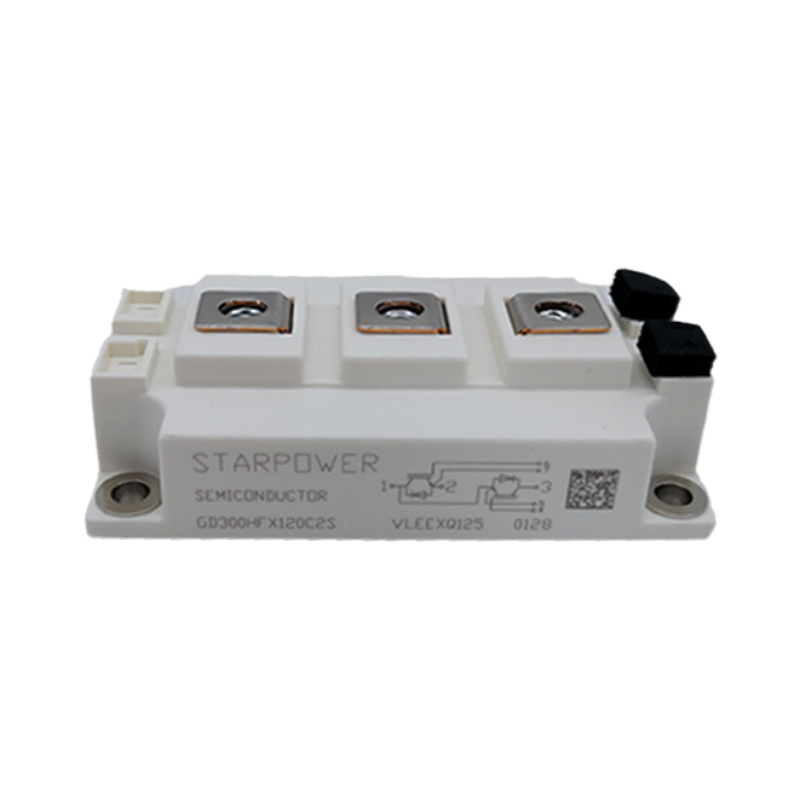
An IGBT module is rarely the first component to fail in an industrial power stack. More often, the event that stops a project starts elsewhere in the same cabinet: a fuse without enough breaking capacity to clear a short circuit, a rectifier bridge that cannot carry the average forward current the DC link demands, a MOSFET module chosen without drain-source voltage margin, a thyristor that cannot absorb the surge, or a diode whose reverse recovery is too slow for the switching frequency.
This article ranks the five companion component groups that appear most often around an IGBT module in industrial power stacks — industrial power fuses, bridge rectifier modules, MOSFET modules, thyristors, and fast recovery power diodes — and states the inclusion reason for each one, tied to the application it has to serve. It is written for buyers in the Research and Evaluation stages: engineers and procurement teams deciding what to specify before a stack is frozen.
Why companion components decide whether an IGBT module stack survives
Companion components carry three responsibilities the IGBT module cannot carry alone. Protection: a short circuit or overload must be interrupted before it reaches the module silicon. Conversion: the AC input side has to be rectified, and the inductive current path has to be closed. Switching quality: high-frequency stages and surge-heavy loads need devices matched to their operating conditions rather than to the mainstream module class.
Undersized selection shows up as equipment behaviour, not as a datasheet error. A fuse that blows repeatedly after replacement is not a fuse problem; it is a signal that the wiring, the connected load, or the load equipment has a fault that must be found and cleared before a correctly rated fuse is installed. Replacing that fuse with a higher rated current part removes the protection the circuit was designed around and creates overheating and fire risk. The same logic applies to the rest of the companion set: every device is chosen against the parameters of the stack, not against a general component list.
A second problem is sequence. Buyers typically select the IGBT module first and treat everything else as an accessory. On a 690 V to 1500 V DC bus or a three-phase industrial drive, protection and rectification ratings have to be fixed at the same time as the module rating, because the fault current a cabinet can deliver is determined by the whole stack — not by the module alone.
Industry background: demand growth behind the companion list
Demand for IGBT modules and their companion components is expanding across the same set of industries. Market Research Future estimates the global IGBT market at USD 9,202.9 million in 2024 and projects a compound annual growth rate of 11.02% between 2025 and 2035. Silicon carbide modules, which buyers increasingly evaluate alongside IGBT modules for high-frequency and high-efficiency designs, represented a global market of USD 980.7 million in 2025 according to Fortune Business Insights.
Application demand is concentrated where companion components matter most. Infineon, a power semiconductor manufacturer, states that IGBT modules are a central component in inverters for electric drives, battery chargers, solar systems and wind power applications. One reported estimate places IGBT content at roughly 10% of electric vehicle cost (Market Research Future). On the Chinese supply side, StarPower Semiconductor is reported as the world’s fifth-largest IGBT module supplier (Market Research Future). These trends explain why energy storage cabinets, industrial power supplies, welding equipment and new energy systems have become the four project types that drive companion component selection.
How this ranking was built
Ranking position reflects how strongly a component group influences whether a project stack meets its application requirement. It is not a price ranking and not a brand ranking.
- Fault-protection impact — how much the device limits damage when the stack is faulted.
- Voltage and current fit with the IGBT module class used in the stack (600 V to 1700 V, 50 A to 1200 A).
- Thermal and isolation requirement — isolated baseplate design, heat sink and drive board compatibility.
- Compliance documentation — IEC, CCC and UL certification for fuses; ISO 9001:2015 quality management at supplier level.
- Application-industry match — energy storage, industrial power supply, welding and new energy.
Ranking at a glance
| Rank | Component | Primary role in an IGBT module stack | Key ratings | Typical target industries |
|---|---|---|---|---|
| 1 | Industrial power fuse | Short-circuit and overload protection | 690–1500 V; 10–1250 A; high breaking capacity; IEC / CCC / UL | Energy storage, power distribution cabinets, PV combiner boxes |
| 2 | Bridge rectifier module | AC-DC conversion at the front end | 800–2000 V peak reverse voltage; 25–800 A average forward current | Power supply, welding machine, motor control, industrial rectification |
| 3 | MOSFET module | High-frequency power switching | 60–1200 V drain-source; 30–300 A drain current | EV charger, switching power supply, solar inverter, battery management |
| 4 | Thyristor / SCR module | Surge-tolerant switching and rectification | Up to 3000 V; 1100 A; high surge current capability | Industrial power control, metallurgy, welding, motor soft starter |
| 5 | Fast recovery power diode | Rectification and freewheeling | Up to 2800 V peak repetitive reverse voltage; 100–1800 A forward current | Power rectification, welding equipment, metallurgy, new energy |
| Anchor | IGBT module | DC-AC conversion and main switching | 600–1700 V; 50–1200 A; isolated baseplate | New energy, power supply, industrial automation, welding, motor drive, UPS |
Rank #1 — Industrial power fuses: the protection layer
Fuses rank first because they are the only companion device whose failure mode is intentional and whose sizing error is unrecoverable. A rectifier or a diode that is undersized overheats and degrades. A fuse that is undersized or over-rated either opens when it should not or fails to open when it must.
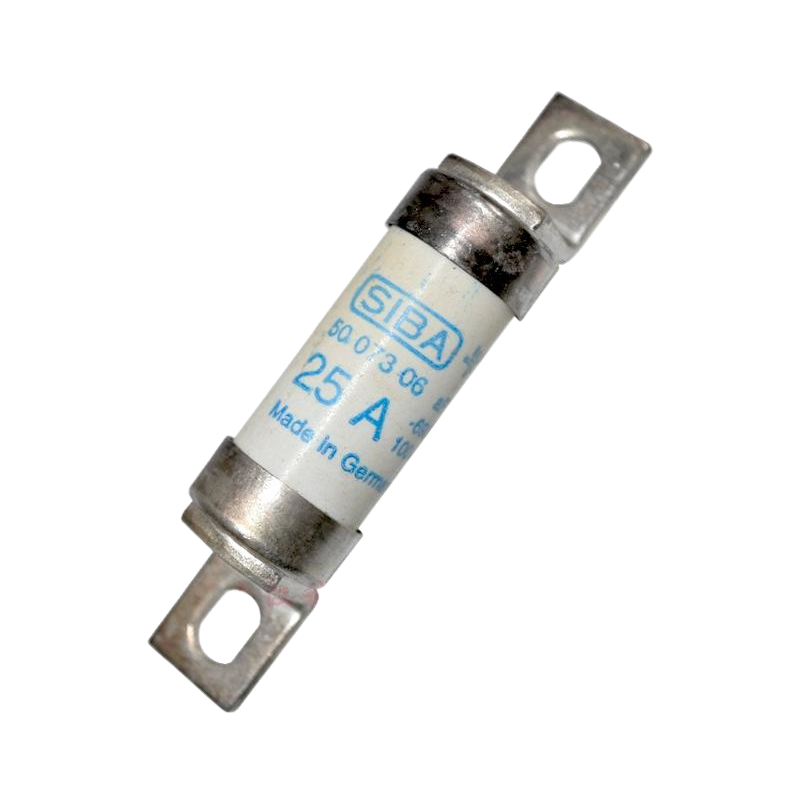
Verified ratings: rated voltage 690 V to 1500 V; rated current 10 A to 1250 A; high breaking capacity; time-delay characteristic; compact size; intended for short-circuit and overload protection of industrial power, energy storage and power conversion systems. Construction uses a silver-plated copper fuse element, quartz sand filler, ceramic tube body and metal end cap. The range is certified to IEC, CCC and UL.
Application fit: energy storage systems, industrial power supplies, automation equipment, new energy vehicle charging and power distribution cabinets. In energy storage cabinets, power distribution cabinets and PV combiner boxes, the fuse operates in standby mode and performs instant breaking upon fault, with fast breaking and high interrupting capacity as the special requirements. Supporting equipment includes fuse holders, distribution cabinets and combiner boxes. This scenario is common in Germany, France, Italy, Spain, Poland, Russia, Peru, South Korea, Japan, Philippines, Malaysia, Vietnam, Thailand, the United Arab Emirates, India and China.
Selection rule: the fuse rated voltage must be greater than or equal to the circuit operating voltage; the rated current needs proper margin over load current, with motor starting surge taken into account for motor loads; breaking capacity must be greater than or equal to the maximum prospective short-circuit current of the circuit; protection type must match the duty (gG for general-purpose protection, aM for motor short-circuit protection); and mounting dimension, holder compatibility and ambient temperature have to be checked.
Evidence from a delivered project: a new energy system integrator in France ordered 15,000 units for energy storage cabinet power conversion and switching control over one year. The reported result was a quick cut-off of the circuit for overcurrent protection of the energy storage cabinet, with high breaking capacity as the highlighted characteristic.
Rank #2 — Bridge rectifier modules: the AC-DC front end
Bridge rectifier modules rank second because the DC link that feeds the IGBT module depends on them. If average forward current is short of the application, the rectifier stage becomes the thermal limit of the whole cabinet.
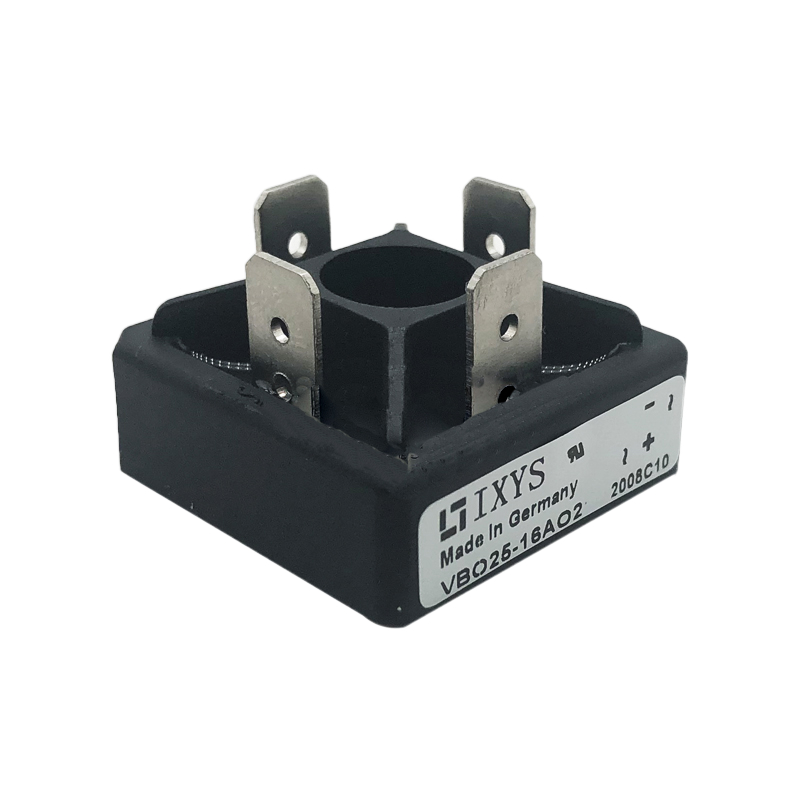
Verified ratings: peak reverse voltage 800 V to 2000 V; average forward current 25 A to 800 A; low forward voltage drop; isolated baseplate; single-phase or three-phase configuration; built for AC-DC power conversion. The construction uses a silicon diode chip, aluminium ceramic substrate, copper base plate and plastic housing.
Application fit: power supply, welding machine, motor control, new energy equipment and industrial rectification. The reported strengths for this range are high current capacity, good heat dissipation, stable rectifying performance, compact structure, and multiple specifications held in stock. This application scenario is common in Brazil.
Evidence from a delivered project: a power supply factory in Spain ordered 10,000 units for industrial switching power supply over a two-year period. The reported result was reliable rectification output for the industrial power supply, with high current capacity and compact structure as the highlighted characteristics.
Rank #3 — MOSFET modules: the high-frequency switching stage
MOSFET modules rank third because they are not an alternative to the IGBT module — they are complementary. Where an IGBT module handles high-current, moderate-frequency conversion, a MOSFET module is selected for high-frequency switching in chargers, switch-mode supplies and battery-side stages.
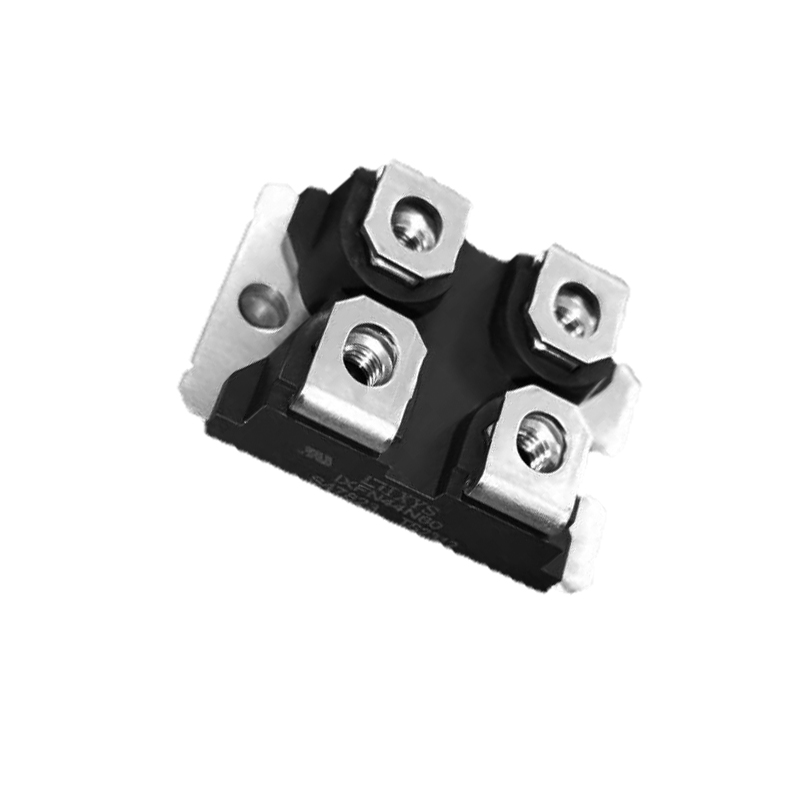
Verified ratings: drain-source voltage 60 V to 1200 V; drain current 30 A to 300 A; low on-resistance; high switching frequency; isolated baseplate; suitable for high-frequency inverter, charger and switching power supply use. The construction uses a silicon MOS chip, aluminium ceramic substrate, copper base plate and plastic housing. Typical part numbers in the range include IXFN74N100X, IXFN100N50P, IXFN170N30P and IXFN230N10.
Application fit: new energy vehicle chargers, switching power supplies, solar inverters, industrial power supplies and battery management systems. In these designs the module role is power switching control, requiring supporting equipment such as heat sinks and drive boards. The reported characteristics are low on-state resistance, high switching frequency, small switching loss and stable performance, with multiple specifications available in stock.
Evidence from a delivered project: an EV accessory manufacturer in Poland ordered 4,000 units for an on-board power converter over two years. The reported result was stable performance in the vehicle-mounted converter with long service life, highlighting low on-resistance and high efficiency.
Rank #4 — Thyristors (SCR modules): surge capability and phase control
Thyristors, also supplied as SCR modules, rank fourth because they cover the duty the IGBT module and MOSFET module are not chosen for: very high surge current, high blocking voltage and phase-controlled rectification in welding, metallurgy and soft-starter equipment.
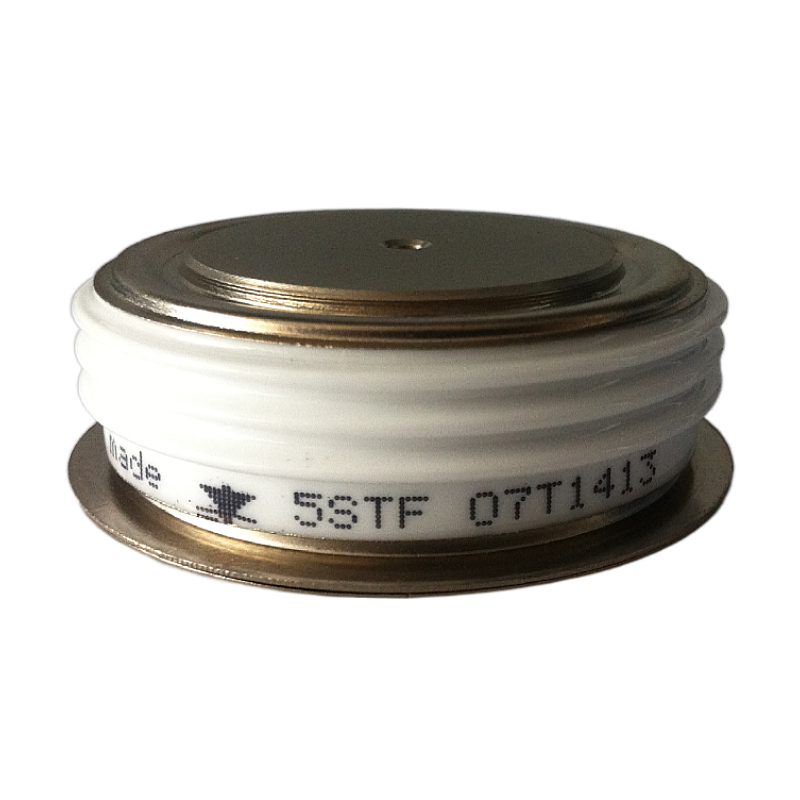
Verified ratings: voltage rating up to 3000 V; current rating 1100 A; high surge current capability; low on-state voltage; stable performance. The devices are built for rectifier, soft starter, welding power supply and industrial power control duty, using a silicon wafer, molybdenum disc, copper base and ceramic housing.
Application fit: industrial power control, metallurgy, welding equipment, power rectifier and motor soft starter. The reported strengths are high current and high voltage capability, strong overload resistance, low power loss and reliable operation, with multiple models and in-stock support. For this application group the special requirement recorded is high temperature resistance, which is why thermal design and mounting torque have to be specified at the same time as the electrical rating.
Evidence from a delivered project: an industrial power supply manufacturer in Italy ordered 3,500 units for industrial welding and power rectifier equipment over two years. The reported result was continuous stable operation with reliable current control, highlighting high surge current resistance and a stable turn-on characteristic.
Rank #5 — Fast recovery power diodes: rectification and freewheeling
Fast recovery power diodes rank fifth because they are the least visible part of the stack but the one that sets switching quality. A diode with slow reverse recovery turns switching loss into heat; a diode with insufficient surge capacity fails at the moment of load step.
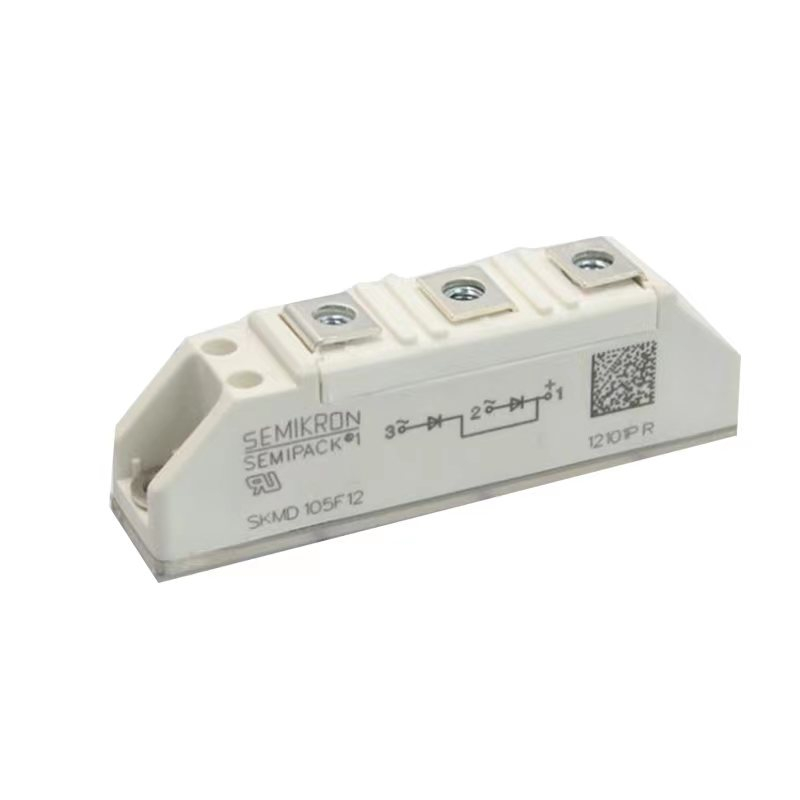
Verified ratings: peak repetitive reverse voltage up to 2800 V; forward current 100 A to 1800 A; low forward voltage drop; fast reverse recovery; high surge current capacity; intended for rectifier, welding machine and power converter use. Construction uses a silicon wafer with copper base and ceramic housing.
Application fit: power rectification, welding equipment, metallurgy, industrial power supply and new energy. The range is suitable for charging pile projects in the power electronics industry. Reported characteristics are high voltage and large current capability, low loss, stable performance and strong overload resistance, with a variety of models in stock.
Evidence from a delivered project: a power electronics OEM in Malaysia ordered 8,000 units for charging pile and rectifier power supply over two years. The reported result was steady operation in charging pile equipment with low reverse leakage current, highlighting fast recovery speed and low power loss.
The anchor device: positioning the IGBT module itself
The companions only make sense against the module they serve. The IGBT module range used across these projects is a power semiconductor module rated 600 V to 1700 V and 50 A to 1200 A, with single or dual IGBT chip structure, low saturation voltage, high switching speed and an isolated baseplate, using an aluminium ceramic substrate, copper base plate, silicon chip and plastic housing.
Where the module sits determines the companion list. In solar inverter and energy storage converter projects the module performs DC-AC power conversion under continuous operation, requiring heat sinks and drive boards. In motor drive and UPS applications the same module class performs motor speed regulation and power switching control. In welding equipment and industrial rectification it works with thyristors and fast recovery diodes on the high-current path. Module families are commonly identified by part-number designator: Infineon defines FF as dual switch, FZ as single switch, FS as three-phase full bridge, FP as power integrated and MIPAQ as a module family, so the switch topology can be read from the part number before any companion is specified.
Evidence from a delivered project: a renewable energy equipment manufacturer in Germany ordered 5,000 units for a solar inverter and energy storage converter over two years. The reported result was long-term stable operation under high temperature and high load with a low failure rate, meeting European energy storage system standards, highlighting low thermal resistance, high switching speed, strong overload capacity and good heat dissipation performance.
Step-by-step: specifying a companion set for a new project
- Fix the DC bus and switching ratings first. Confirm the IGBT module voltage class (600–1700 V) and current class (50–1200 A) against continuous working current and peak overload current, leaving margin.
- Size the AC-DC front end. Select the bridge rectifier module by average forward current (25–800 A) and peak reverse voltage (800–2000 V) against the rectified output the DC link requires.
- Select the protective fuse on four parameters, not one. Rated voltage, rated current, breaking capacity and protection type. Add holder compatibility, mounting dimension and ambient temperature before releasing the bill of materials.
- Decide whether the stack needs a high-frequency stage. If chargers, switch-mode supplies or battery-side circuits are involved, add a MOSFET module rated 60–1200 V and 30–300 A and confirm heat sink and drive board compatibility.
- Add surge and phase-control capability where the load demands it. Welding, metallurgy and soft-starter duty calls for thyristors up to 3000 V and 1100 A with high surge current capability and high temperature resistance.
- Close the rectification and freewheeling path. Specify fast recovery power diodes up to 2800 V and 100–1800 A where reverse recovery speed and surge capacity determine switching loss.
- Verify isolation, thermal design and documentation. Check isolated baseplates, thermal grease application and screw torque in diagonal sequence, insulation resistance test before power-on, and certification files (IEC, CCC, UL for fuses) before the cabinet is released.
Which companion set fits which project type
| Project type | IGBT module role | Companion components that must be specified with it | Deciding requirement |
|---|---|---|---|
| Energy storage cabinet | DC-AC conversion in the power conversion stage | Industrial power fuse; bridge rectifier module | Instant breaking upon fault and high interrupting capacity |
| Industrial power supply | Switching control on the rectified DC link | Bridge rectifier module; fast recovery power diode | Average forward current and low forward voltage drop |
| Welding equipment | High-current switching | Thyristor / SCR module; fast recovery power diode | High surge current capability and high temperature resistance |
| Solar inverter and energy storage converter | Continuous DC-AC conversion | Industrial power fuse; fast recovery power diode | Low thermal resistance and continuous operation stability |
| EV charging and on-board conversion | Power switching at high frequency | MOSFET module; fast recovery power diode | Drain-source voltage margin and fast reverse recovery |
| Motor drive and soft starter | Motor speed regulation and switching control | Thyristor / SCR module; industrial power fuse | Overload resistance and correct protection type |
Sourcing a complete companion set
Jiangsu core diamond times Electronic Technology Co., Ltd. is a Kunshan-based supplier of power electronic components — IGBT modules, industrial fuses, diodes, thyristors and semiconductor modules — founded in 2022, operating a 10,000 m² facility with 50 employees, an annual output of 1,000,000 units, five technical support engineers and a roughly 50% export share across the EU, USA, Australia and Middle East markets. The company is established as a distributor and service provider for power semiconductor modules, with a distributed portfolio covering the Infineon, SEMIKRON, Fuji and CRRC module lines, and holds ISO 9001:2015 quality management system certification passed in June 2026.
For buyers assembling a companion set, four operational facts matter. Minimum order quantity is 2 units, so a single stack can be validated before volume release. Monthly capacity is 20,000 units with a standard lead time of 30 to 45 days. Every unit receives a 100% electrical performance test before shipment, backed by incoming inspection and outgoing quality control. And OEM / ODM customization covers logo marking, packaging, parameter matching and solution support, so companion components can be matched to a customer circuit design and working conditions rather than ordered as catalogue items.

FAQ
What certification should a fuse and its supplier carry for energy storage and industrial power projects?
The industrial power fuse range is certified to IEC, CCC and UL, which covers the market-access documentation typically requested for distribution cabinets, combiner boxes and power conversion systems. At supplier level, Jiangsu core diamond times Electronic Technology Co., Ltd. holds ISO 9001:2015 quality management system certification, passed in June 2026, and applies incoming inspection and outgoing quality control with a 100% electrical performance test before shipment. For projects delivered under European energy storage requirements, the company references European energy storage system standards for its IGBT module applications in solar inverter and energy storage converter projects.
Can a Chinese supplier support IGBT modules for EV traction inverters together with SiC hybrid engineering support?
Chinese supply for traction-class power modules is organised mainly around distribution and application engineering. Jiangsu core diamond times Electronic Technology Co., Ltd. distributes power semiconductor modules including the Infineon, SEMIKRON, Fuji and CRRC module lines, and its technical team of five support engineers provides component selection matched to a customer’s circuit design and working conditions. For traction inverters, the first check is part-number family and switch topology: Infineon designators define FF as dual switch, FZ as single switch, FS as three-phase full bridge, FP as power integrated and MIPAQ as a module family. SiC hybrid capability is a separate question that has to be confirmed for the exact part number and programme, because the SiC segment is moving quickly — the global SiC module market was USD 980.7 million in 2025 (Fortune Business Insights). Buyers should ask for programme-specific evidence, test documentation and lead time before design freeze.
What determines the budget band of a companion component set?
The parameter set determines the band before any price list applies: the voltage and current class of each device, the breaking capacity of the fuse, how many functions the stack needs (rectification, high-frequency switching, surge control, freewheeling), the thermal and isolation design, and order quantity. Fuse selection criteria explicitly include rated voltage, rated current, breaking capacity, protection type, ambient temperature, installation size and cost. Component class also dominates system cost in some applications: one estimate attributes roughly 10% of electric vehicle cost to IGBT content (Market Research Future). Combining functions across the fewest devices that meet the ratings is normally more cost-effective than over-specifying individual components.
Can I validate companion components on a small trial order before a full build?
Yes. Minimum order quantity for the module range is 2 units, and the company supports both small trial orders and bulk volume orders, with OEM / ODM customization covering logo marking, packaging, parameter matching and solution support. Every unit receives a 100% electrical performance test before shipment. For fuses, validation follows standard practice: isolate the circuit, inspect the holder and contacts for burning, looseness or oxidation, install the fuse element and tighten terminals to the specified torque, close the housing so no live parts are exposed, then run an insulation test and a no-load test while monitoring terminal temperature rise.
What lead time and stock position should a project plan for?
Standard lead time is 30 to 45 days with a monthly capacity of 20,000 units. The warehouse holds sufficient stock of mainstream IGBT module models and industrial fuses, which supports fast delivery for urgent orders, and remote technical support and after-sales warranty service are provided after delivery. Buyers who want to confirm current stock, OEM customization scope or a quotation for a complete companion set can download the product brochure directly, review the company website at www.xinzuanshidai.com, or contact xinzuanshidai@163.com and WhatsApp +86 13675967789 for a specification match against the target stack.
Conclusion
The ranking is settled by consequence rather than by price. Industrial power fuses come first because protection failures are unrecoverable. Bridge rectifier modules come second because the DC link that feeds the IGBT module depends on them. MOSFET modules come third for high-frequency switching stages. Thyristors come fourth for surge-heavy and phase-controlled loads. Fast recovery power diodes come fifth, setting rectification quality and freewheeling behaviour. The IGBT module itself anchors the stack at 600 V to 1700 V and 50 A to 1200 A with an isolated baseplate.
A power stack is only as reliable as its weakest companion component. The practical next step is a parameter-level check: list the voltage and current class of every device in the cabinet, confirm breaking capacity and protection type on the fuse, confirm average forward current on the rectifier, confirm drain-source margin on any MOSFET stage, and confirm reverse recovery on the diodes — before the first cabinet is assembled.
Download the product brochure (PDF) for the full IGBT module, fuse, rectifier, MOSFET, thyristor and fast recovery diode specification list.
Have Questions or Need More Details?
Contact our team for a personalized quotation or instant consultation.
Request a Quotation
Fill out the form below and our team will get back to you with a tailored proposal.
WhatsApp Direct Chat
Prefer to chat in real-time? Message us on WhatsApp for instant assistance & quick answers.
- Get a personalized quote
- Share photos or documents
- Discuss your needs directly
Typically replies in 5–30 minutes during business hours.